

9 min read • Sep 14, 2026
Key takeaways
- How you pay tips to employees directly impacts employee retention and guest satisfaction.
- The most common tip payout methods are daily cash payouts, P2P app payouts, digital tipping platforms, and payroll payouts.
- Digital tipping platforms give hospitality businesses flexibility while creating a smoother, more transparent tip-out process for everyone.
In hospitality and service businesses, tips are a major component of employees’ take-home pay. The challenge for owners and managers is figuring out how to pay tips to employees in a way that’s fast, fair, and compliant.
The tip payout method you choose affects not just payroll, but employee morale, guest experience, and even your bottom line.
This guide compares common payout methods and shows why digital tipping platforms and tip payout software are quickly becoming the best solution for modern service businesses.
![[CTA] Image - Compliance 3 - 1200 x 627](https://no-cache.hubspot.com/cta/default/6775923/interactive-190476979820.png)
Quick overview: Tipping basics
Before we dig into tip payout methods, let’s ground ourselves in a few fundamentals of tipping:
What counts as a tip?
According to the U.S. Department of Labor, a tip is money a customer freely gives to an employee in recognition of their service. Tips can be cash, credit/debit card additions, or digital transfers.
Tax rules
Generally speaking, tips are considered taxable income. Employees must report them, while you, the employer, are responsible for withholding and paying payroll taxes on tip income.
Remember: Tipping laws vary by state, so familiarize yourself with your state’s laws before choosing how you structure tip distribution and which payout method to use.
Tip credits
Employers in many (but not all) states can take a tip credit, which allows them to pay a base cash wage below minimum wage, so long as their tips will make up the difference.
For example, under federal law, tipped employees can be paid as little as $2.13/hour if tips bring them to at least $7.25/hour.
But tip credits aren’t universal. Some states require employers to pay the full minimum wage before tips. Mismanaging credits can lead to compliance issues, back pay liabilities, and penalties.
👉 Learn more in our full guide on tip credits.
Tip pooling
At a lot of hospitality businesses, tips don’t go directly to one employee — instead, they’re shared across a team. This is the process of tip pooling.
A tip pool is when you collect all tips and redistribute them based on an agreed system (for example, a percentage split between servers, bussers, and bartenders).
Tip pooling helps ensure an even playing field among all staff (particularly FOH and BOH). However, tip pools have to follow strict rules: Managers and supervisors generally can’t partake, and employees need transparency on how tips are divided.
👉 Learn more in our full guide on tip pooling.

Why your tip payout method matters
The way you pay tips to employees has ripple effects far beyond payroll. It impacts how your team feels, how guests remember their experience, and how much time you spend managing tips when you’d rather be tackling more important tasks.
Here’s why it’s worth thinking carefully about how you pay tips to employees:
1. It can boost staff retention and morale
Nothing sinks employee morale faster than feeling cheated out of tips or waiting weeks to receive them. If tip payouts are consistently delayed, unclear, or unfair, employees are sure to start seeking out new employment.
A reliable and transparent tip payout process turns tips into a reason to stick around, not a reason to quit.
2. It impacts the guest experience
Staff who are frustrated by slow or unfair tip payouts will show their frustration in their service. And when service falters, the guest experience takes a hit.
3. It affects your business’s compliance
Tips are taxable income, which means the IRS is paying attention. Sloppy reporting or missing records can spiral into audits, penalties, or back-pay claims.
It’s worth establishing a tip payout method that leaves a clear audit trail — it’ll save you from frantically digging through messy spreadsheets and paperwork when tax season rolls around.
👉 Related reading: Consequences of Not Reporting Cash Tips: Risks & Solutions
4. It can slow down or speed up your operations
Every hour you spend counting cash, double-checking envelopes, or addressing staff disputes is an hour stolen from more important work.
With a smooth tip payout method in place, owners and managers can focus on training staff, improving the guest experience, and actually running the business.
Comparing tip payout methods
Your business has plenty of options for paying out tips. Each method affects speed, security, compliance, and staff satisfaction differently, so it’s worth understanding the trade-offs before you choose a method for your business.
Method 1: Daily cash payouts
Daily cash payouts are the most traditional way of paying tips to employees, especially in restaurants and bars.
At the end of each shift, the manager tallies up the tips and hands them out to employees before they head home. For staff, this method offers immediate gratification and a tangible sense of reward for their work. For businesses, it’s pretty straightforward, too.
But this traditional system has a lot of drawbacks:
First, handling large amounts of cash on-site is risky, both in terms of theft and human error.
Second, it eats up valuable time for managers who need to count, verify, and distribute cash fairly.
Finally, as guests increasingly prefer digital payments, maintaining a steady flow of cash for payouts is becoming less realistic.
| Daily cash payouts | |
| Pros | Cons |
| All tips are accounted for and paid out each day Employees enjoy instant gratification by receiving tips right away | Requires having cash on hand (increasingly uncommon in a cashless society) Daily cash runs are time-consuming and tedious Requires storing large sums of cash on-site, which poses a security risk Difficult to keep track of and can create problems at tax time |
Method 2: P2P app payouts (Venmo, Zelle, CashApp, etc.)
P2P (peer-to-peer) payment apps have become a popular workaround for the hospitality industry trying to keep up with a cashless world.
The concept is simple: Managers collect digital tips, then transfer them to employees’ personal accounts using apps like Venmo, Zelle, or CashApp. It can be done daily or at different cadence (weekly, for example).
On the surface, it’s a good cashless alternative. But these apps weren’t built for business transactions, so we don’t recommend them.
P2P apps generally lack built-in compliance tools, tax reporting features, and proper oversight for employers. And for employees who don’t have a bank account, P2P apps can create barriers to getting paid fairly.
| P2P app payouts | |
| Pros | Cons |
| Easy to use Doesn’t require having cash on-hand | Opens your business up to legal issues around tax withholdings and tip reporting Most P2P apps aren’t designed for business transactions Requires employees to download an app and/or create an account for the P2P platform (which requires having a bank account) |
Method 3: Digital tip payouts
Digital tip payouts — facilitated by tipping software — is the smarter alternative to using a P2P app like Venmo. Through the software, managers can allocate tips accordingly and send digital payouts at any cadence
The benefit is that management can payout employees digitally without the hassle of manually doing the math and creating Venmo payments for every staff member. There’s also far less risk, as digital tipping software was designed specifically for hospitality and service businesses. And best of all: No cash runs!
| Digital tip payouts | |
| Pros | Cons |
| Tips are deposited directly into each employee’s account No need to handle physical cash Creates a clear, documented trail to simplify reporting at tax time Saves time on cash runs and handling paper checks More secure than daily cash payouts | Some digital tipping solutions may charge extra fees Generally requires each employee to have a bank account |
Method 4: Paying tips through payroll
When you pay tips through payroll, you first collect all tips, then add them to employees’ regular paychecks. This approach gives you maximum control and visibility over tip income.
By bundling wages and tips into one documented process, you spare yourself some hassle and ensure that every deduction (taxes, benefits contributions, etc) is properly accounted for.
Employees get itemized pay stubs showing exactly how much they earned in wages versus tips, which helps provide clarity and prevent disputes.
The only trade-off is timing. Staff can’t access their earnings until the next pay cycle, which can feel like a long wait compared to daily payouts. Still, many businesses prefer payroll payouts for their transparency and simplicity.
| Paying tips through payroll | |
| Pros | Cons |
| Easier to accurately track and report tip income Saves time by combining payout of hourly wages with tipped income Creates a clear, documented trail to simplify reporting at tax time No cash required | Delayed gratification — employees have to wait to receive tips |
Daily payouts vs. payroll payouts: How often should you pay tips to employees?
Let’s talk about the timing of your tip payouts.
In other words, when do you pay out tips to your employees? And how frequently?
Timing can impact employee satisfaction and operational efficiency just as much as the payout method itself.
Daily payouts give employees immediate access to their tips at the end of each shift. For a lot of hospitality workers, immediate payouts help with day-to-day expenses like gas, groceries, or childcare.
So from an employee retention standpoint, daily payouts can be a powerful motivator.
But the trade-offs with daily payouts are considerable:
- Managers spend more time counting and distributing tips
- Constantly handling cash creates risk
- It’s harder to keep track of tips (which creates major headaches during tax season)
In contrast, payroll payouts fold tips into an employee’s regular paycheck. This approach provides structure, transparency, and compliance benefits, since wages and tips are bundled into one well-documented process. For you, the employer, it simplifies reporting and reduces the chance of error. The only downside is that employees aren’t tipped out same-day.
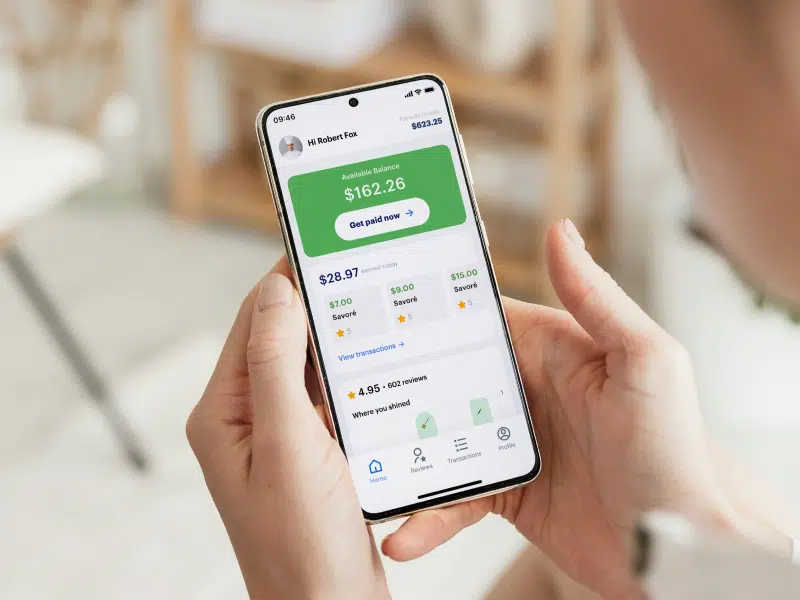
The best solution falls somewhere in the middle: A digital tipping and tip payout software like eTip that enables instant tip payouts or payroll payments. Employees can log into an app to track their tip income and get instant payouts.
How to pay tips to employees through payroll
Step 1: Collect all tips at the end of each shift or day
If you want to pay tips through payroll, management will have to collect all tips from each shift/day. Make sure you’re tracking how much each employee earned. Documentation is key!
Step 2: Transfer digital tips from merchant account to your payroll account
Once customers’ transactions have settled and appear in your merchant account, move the funds into your payroll account. Scheduling transfers ahead of payroll processing days prevents delays and ensures the money is ready when it’s time to cut checks.
Step 3: Distribute tips among employees according to your tipping polices
Divide the total tips based on your established system, whether that’s individual earnings, a tip pool, or a hybrid model.
At this stage, confirm that each employee’s wages plus tips meet state and federal minimum wage requirements. If they don’t, you’ll need to make up the difference.
Step 4: Calculate taxes and other deductions according to state laws
Tips are taxable income, which means you’ll need to withhold federal and state income tax, as well as FICA (Social Security and Medicare). Any other authorized deductions (like benefits contributions) should also be factored in. Be sure to clearly itemize these on employees’ pay stubs so they understand how their income is calculated.
Step 5: Process payroll
Finally, run payroll as you normally would, issuing direct deposits or paper checks and providing itemized pay stubs. With modern payroll software, this step is usually automated, but it’s still important to confirm everything lines up before funds are released.
Your best bet to pay tips to employees: A digital tipping platform
The best way to pay tips to employees is with a comprehensive digital tipping platform.
Digital tipping software is an all-in-one solution that not only ensures an easier tip payout process but also facilitates effortless digital tipping. These powerful platforms provide a structured, secure, and transparent way to handle tips from the moment a guest pays to the moment an employee gets their share.
The flexibility is what makes digital tipping systems so powerful:
Owners and managers can choose to pay tips out instantly — keeping staff motivated with same-day access — or integrate with payroll software so tips appear alongside regular wages.
Either way, digital tipping systems:
- Take the headache out of counting and reconciling tips
- Keep compliance problems off your plate
- Give employees (and the IRS) a clear, trustworthy record of all tipped income
A digital tipping platform isn’t just a payout method — it’s a complete framework for making tipping easier, faster, and fairer for everyone.

Enable digital tipping & easy tip payouts with eTip
Among digital tipping systems, eTip has become the solution of choice for leading hotels, restaurants, and service businesses across the country.
Here’s why:
- Seamless guest experience
Guests tip by scanning a QR code — they don’t have to download an app or learn a new system, it’s just a quick and familiar process. - Flexible payouts
Managers can enable instant, direct-to-employee transfers or choose to run tips through payroll. Either way, staff get paid on time, every time. - Manager control
Customizable allocations let you split tips by role, shift, percentage, or team — whatever works best for your business. - Compliance is built in
Real-time reporting dashboards, downloadable records, and payroll integrations make IRS and labor law compliance effortless. - Trusted infrastructure
Unlike competitors that rely on Stripe, eTip operates with its own sponsor bank and FBO account. Every customer and every employee is approved, ensuring no one gets left behind. Add PCI and SOC2 certification plus partnerships with Visa and American Express, and you have one of the most secure, trusted platforms on the market.
The results speak for themselves: businesses that use eTip see up to 5x more tips, a 30% boost in staff retention, and as much as a $5/hour increase in staff income.
If you’re looking for the most reliable way to pay tips to employees while modernizing guest interactions and reducing operational headaches, eTip delivers the full package.
Ready to simplify tip payouts? Get a demo of eTip.